The honest answer to “what’s the best drone for filmmaking?” is that the question is wrong. There is no single drone that’s the best for filmmaking, and any post that gives you one model number with confidence is selling you something — usually an affiliate link.
The right question is: “what’s the right drone for me, at this stage, given the work I’m trying to do?” That has different answers at different points in your career, and the upgrade path matters more than the starting point.
I’ve owned four drones across six years of professional filmmaking work — government, weddings, real estate, FPV. Each one was the right drone for me at the time. None of them would be the right drone for someone else at a different stage. Here’s the actual progression and what I’d recommend now if I were starting over.
My drone progression, with hindsight
2018: DJI Phantom 3 4K (entry-level cinematic).
This was my first drone. I bought it with money I couldn’t really afford to lose, which turned out to be the most valuable feature it had. The Phantom is symmetric, a little awkward to read in flight, and it lacks the smart obstacle sensors that newer models have. It was perfect for me precisely because of those limitations: I had to learn to fly carefully, deliberately, and with respect for the gear, because the gear didn’t forgive much.
What it taught me: how to fly without help. Modern drones do a lot of decision-making for you. Older Phantoms don’t. Every flight was a small intentional act. I’d recommend a similar drone — or, today, a DJI Mini — to anyone starting out, for the same reason. The friction is the lesson.
~2021: DJI Mavic 1 (mid-range cinematic).
The Mavic was the upgrade. Foldable, faster, better camera, smarter flight modes, much smoother in wind. The Mavic 1 specifically is a workhorse — you can hand-launch it, it survives more abuse than it should, and the orientation is intuitive (long axis = forward) in a way the Phantom never was. I crashed it once into a tree (cross-wired controls from a video game, the full story is here) and it walked off with leaf stains and zero structural damage.
What it taught me: how to fly with confidence. The Mavic let me stop thinking about the drone and start thinking about the shot. That’s the upgrade you’re paying for at the mid-range tier.
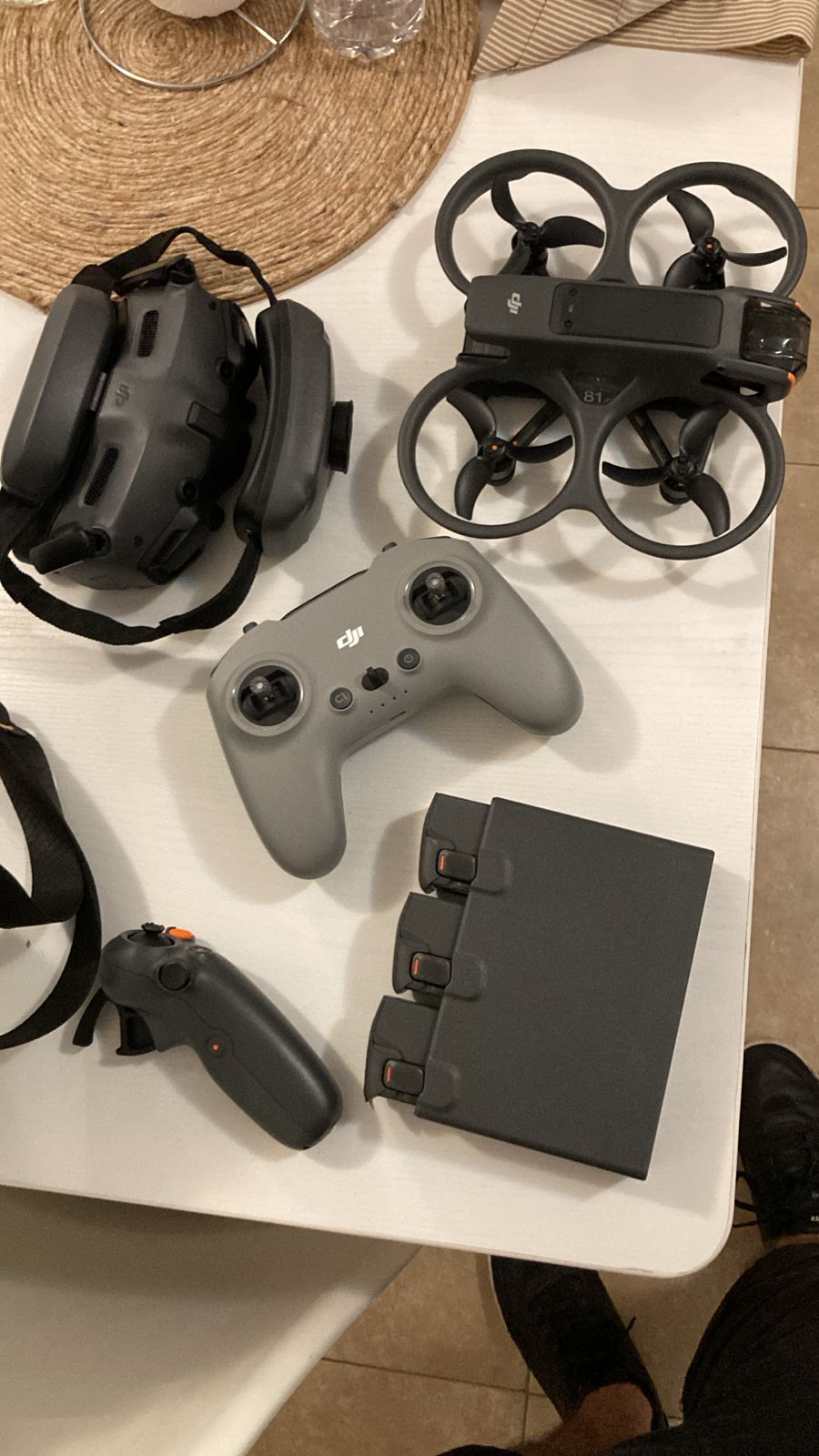
2023 onward: DJI Avata 2 + BetaFPV Pavo 2 (cinematic FPV).
These are my current drones. The Avata 2 is DJI’s accessible cinewhoop — controlled enough that a pilot transitioning from cinematic work can learn it in a few months, capable of shots that no traditional drone can produce. The Pavo 2 is a more serious FPV platform for when I want sharper control of the flight envelope.
The transition to FPV was the biggest creative shift I’ve had in this work. I’ll write about it more elsewhere. The short version: FPV is to traditional drones what traditional drones are to a regular camera. It’s a different craft. Worth learning, not a shortcut.
Government drones (2019–2023): borrowed Mavic Pro variants and Inspire-class units.
I also flew State-owned drones during my time as the official filmmaker for the Governor of Buenos Aires Province. That experience taught me what higher-end gear can do (and how much more punishing the workflow becomes), but it isn’t relevant to the recommendation here — the gear was selected for me by procurement, not by my judgment.
The progression I’d recommend now (starting over, 2026)
If you’re entering drone filmmaking today and you don’t have a specific niche pulling you a different direction, here’s the path I’d suggest. Each step assumes you’re paying for the previous one with the work the previous one enabled.
Step 1: A DJI Mini (current generation)
If you have to start with one drone, start with a Mini. The reasoning is the same as the reasoning that put me on a Phantom 3 in 2018, applied to current gear:
- It’s expensive enough to take seriously, cheap enough to recover from a crash. The crash will happen — my piece on the three I’ve crashed explains why — and the financial recovery from losing a Mini is straightforward in a way that losing a $2,500 cinematic drone is not.
- It teaches you to fly with limitations. The Mini doesn’t have every smart feature of the higher-end models. You’ll bump into the limitations and learn to work around them. That friction is the lesson.
- It’s small enough to travel. Most countries treat drones under 250g (which the Mini is) under more permissive rules than larger models. You can take it on planes, fly in more locations, and avoid registration requirements in some jurisdictions. (Check your local rules — they change.)
- The image quality is genuinely good. The current Mini line shoots clean 4K with reasonable color science. For a beginner pursuing filmmaking, the limit is your skill long before it’s the drone’s sensor.
I’d resist the temptation to buy the more expensive consumer model “to grow into” until you’ve actually outgrown the Mini. Most beginners haven’t. The drone you upgrade from is more useful than the drone you upgrade to in the early years.
Step 2: The mid-range cinematic upgrade — Mavic 4 Pro, Air 3S, or current equivalent
This is the upgrade you make when you’re getting paid for drone work and you’re feeling specific, recurring frustrations with your current gear. Not when you want a more impressive drone. There’s a difference.
The mid-range cinematic upgrade buys you:
- A larger sensor for better low-light performance and dynamic range
- More wind tolerance so weather windows that closed for the Mini stay open for you
- Longer flight time for those wedding receptions where you need 25 minutes of coverage and your batteries don’t agree
- Smarter obstacle avoidance for tighter shots in real estate and complex environments
- A camera with manual control that lets you dial settings the way you would on a ground camera
This is also the tier where DJI Care Refresh starts to make sense for some pilots — see my honest take on it. Higher unit cost, more complex flight envelopes, and you’re flying it as a working tool rather than a learning instrument.
I deliberately don’t list a single specific current model here, because the right model in this tier rotates every 12 to 18 months as DJI refreshes the line. The right move is to read the most recent reviews from working pilots (not just specs) when you’re actually ready to upgrade — and to upgrade because of a specific limitation you’ve hit, not because the new one came out.
Step 3 (optional, branch point): FPV or cinematic specialty
After the mid-range cinematic upgrade, the next investment is no longer about a “better” drone. It’s about a different drone for a different kind of work.
The two main branches:
The FPV branch — for filmmakers who want shots that traditional drones cannot produce. Through-the-window flythroughs, racing, cinewhoop interior work, intimate movement around subjects. Start with a DJI Avata-class drone if you’re making the transition from cinematic; it’s the gentlest learning curve. Move to a more serious FPV platform (Pavo, custom builds) when you’ve internalized the craft and need more control of the flight envelope.
The high-end cinematic branch — for filmmakers whose work demands better sensors, more flight time, dual operators, or specific capabilities the mid-range can’t provide. Inspire-class drones, the upper Mavic models, or specialty platforms. This branch is the one most working pilots can resist for the longest. The mid-range cinematic tier is genuinely capable of professional commercial work — most of the upgrades from there are about specific premium use cases (high-budget commercial, broadcast, narrative film) where someone else is paying for the gear.
Most pilots don’t need step 3 at all. A career in wedding and real estate work can be sustained at step 2 for a long time. Don’t upgrade because you’re bored; upgrade because the work demands it.
The drones I’d actively recommend against
A short list of patterns I’d avoid.
The cheapest drone you can find. Sub-$300 drones from off-brand manufacturers are almost always a mistake. The flight characteristics are inconsistent, the camera quality is unusable for filmmaking, and the failure modes are unpredictable in a way that makes them unsafe. You’ll lose more in crashed drones than you would have spent on a real entry-level model.
Anything from a non-DJI manufacturer for your first drone. This is going to age controversially, but it’s the experience I have. I’ve watched friends try Autel, GoPro Karma, and various other brands as their entry point. The pattern is consistent: the marketing is good, the spec sheet competes with DJI on paper, and the actual flight experience is worse — buggier software, less reliable transmission, slower iteration on firmware fixes. By the second drone, most pilots are on DJI anyway. The first one was an expensive lesson.
This isn’t a fanboy take. DJI has well-known concerns — supply chain politics, customer support that varies by region, software lock-in. But if you’re learning, the maturity of their ecosystem matters more than the headline specs of an alternative.
Used drones from unknown sources. Drones live hard lives. The previous owner crashed it. They’ll tell you they didn’t, but they did. The water exposure was worse than they remember. The motors have hours on them you can’t see. Buy used only from someone you can verify and inspect physically. The “great deal on Marketplace” usually isn’t.
A working answer
If you’ve read this far hoping for a specific recommendation: a current-generation DJI Mini for your first drone, then a current mid-range Mavic when the Mini is genuinely limiting your work, then a deliberate branch into FPV or specialty cinematic only when a specific job demands it. That’s the progression that fits most filmmakers most of the time.
But the better answer — the one I actually believe — is that the drone matters less than the pilot. Buying more drone to fly better is the thing every drone shop wants you to do. It’s not the move. The move is: buy the right drone for your stage, fly it for hundreds of hours until it’s an extension of your hands, and only upgrade when the work has outgrown the gear.
That’s how a drone pays its way, and how a filmmaking career built on drones grows. Not by acquisition. By accumulation.